
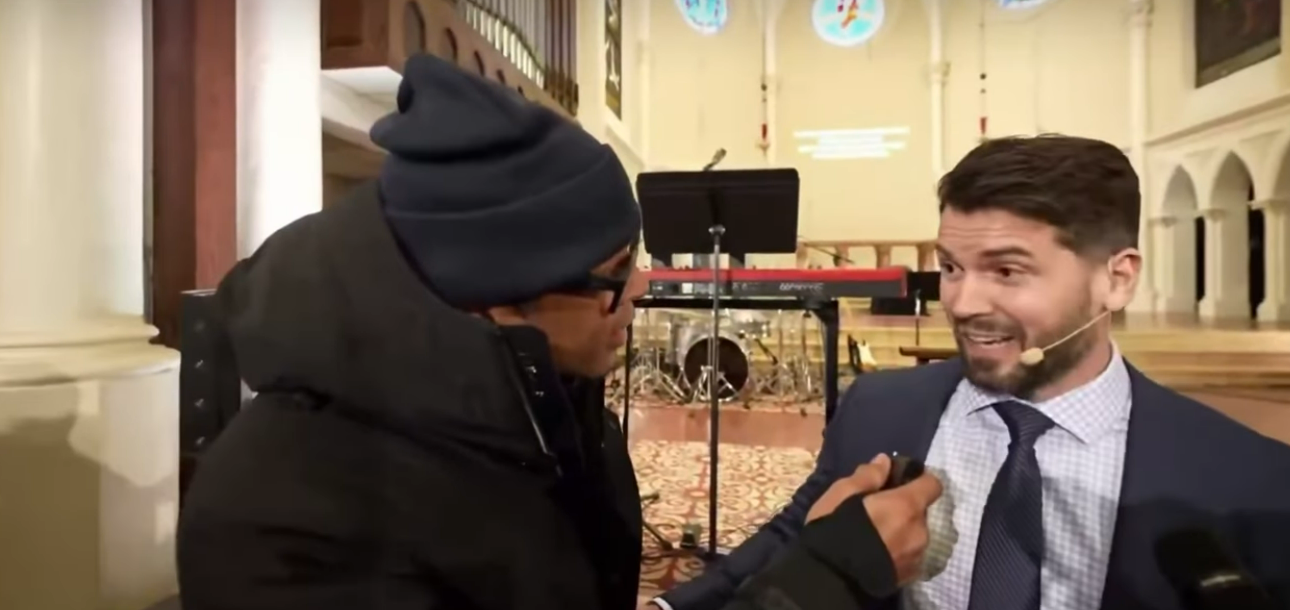

During a Sunday service in St. Paul, Minnesota, a group of protesters stormed into Cities Church. The spectacle was startling and poignant: a congregation gathered in regular prayer was abruptly met by a wave of voices demanding immediate change. The morning’s pace changed from the well-known liturgy to a tense fusion of protest, music, yelling, and media coverage in a matter of minutes. One of the people recording the event was Don Lemon, a former national television personality who is now an independent journalist. His camera followed every interruption while he spoke in a crisp, calm voice that helped viewers understand the change.
Lemon’s presence there was not due to chance or idle curiosity. He had come to Minneapolis in the midst of protests and escalating tensions over immigration enforcement after a tragic incident involving federal officials. The protest, which started outside and moved inside the church sanctuary while the morning service was in progress, blurred the boundaries between civic engagement and religious ceremony when protesters accused the pastor of having concealed connections to ICE.
Quick action was taken by the Department of Justice. Concerned that a house of worship had been invaded without permission, Civil Rights Division officials issued a statement putting Lemon “on notice” of possible legal ramifications under federal regulations that protect places of worship from disturbance. The goal of these safeguards is to keep religious services safe from disturbances that can disrupt worship and harmony within the community.
Instead of avoiding the camera or his coverage, Lemon defended his presence by citing First Amendment rights and journalistic obligations. During a webcast, he declared, “The freedom to protest is part of our civic fabric,” characterizing his participation as neither provocation nor documentation of events as they happened. He maintained that the goal of documenting the protest’s reality was to educate, not to incite. Some observers who believe that on-the-ground reporting is crucial to accurately comprehending societal conflicts found resonance in this position.
| Topic | Key Context |
|---|---|
| Event | Anti‑ICE protesters stormed a Minneapolis church service during worship on January 18, 2026 |
| Location | Cities Church, St. Paul, Minnesota |
| Key Figure | Don Lemon — former CNN anchor and independent journalist covering the protest |
| Government Action | U.S. Department of Justice has “put Lemon on notice” and opened an investigation |
| Legal Point | Federal laws protect houses of worship and may apply (FACE Act invoked by critics) |
| Protests Trigger | Tensions over ICE operations and the fatal shooting of a local protester by an ICE agent |
| Reactions | Severe criticism from federal officials and public figures; Lemon defends his reporting |
| Reference Source | DOJ and protest coverage reports |
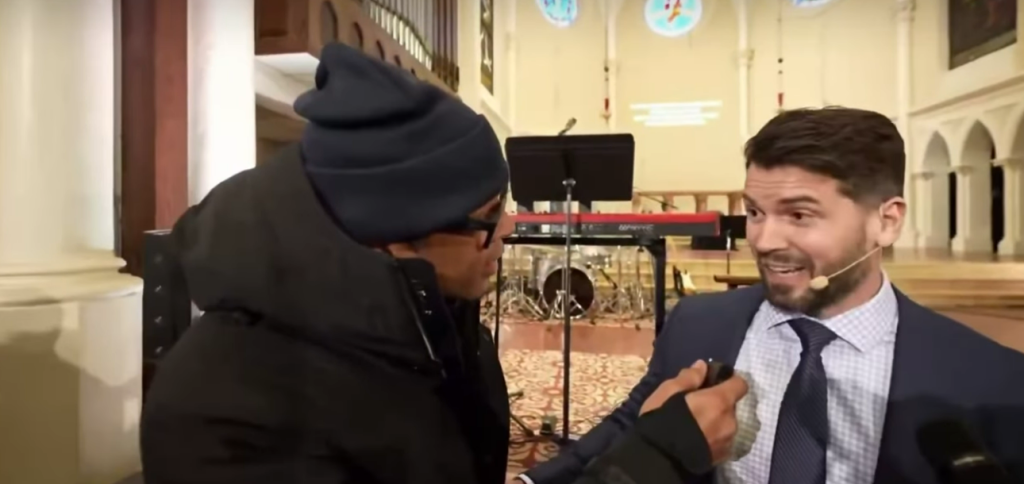
As I watched those early video, I reflected on how unusual it was to see a journalism person plunge so headfirst into the throes of an active protest.
Some, though, had a different perspective on the situation. Cities Church’s pastor and many other religious leaders were deeply shocked that a worship service was interrupted. They stressed the need for measured channels of expression that preserve the integrity of spaces devoted to introspection, community, and spiritual practice, even for valid civic issues. They questioned where disruption starts and protest stops because of the protest’s encroachment and Lemon’s close closeness to it.
Upholding the freedom to report, talk, and gather but also respecting areas that have long been shielded from precisely these kinds of incursions was crucial to the legal discussion that ensued. The Department of Justice’s decision to look into the matter demonstrated how seriously federal authorities take religious rites’ integrity and the possible consequences when that barrier is thought to be crossed.
The larger social discourse emerged in the midst of these layers of ethical and legal scrutiny. Rather of being a publicity ploy, Lemon’s coverage, according to its supporters, brought attention to a persistent rift in civic involvement that calls for responsibility and openness from institutions and authorities alike. They believed that documenting the altercation in its unadulterated state provided a direct and unvarnished window into the reasons behind the protests and the responses of those who had arrived anticipating a traditional morning of prayer. They claimed that the portrayal of civic tension was both substantively instructive and contextually rich.
Others said that it was a mistake for the protesters to enter the church, arguing that advocacy and worship are two different realms that ought to be separated with respect rather than coercion. Their understanding of the church’s function as a communal center rather than a platform for political drama prompted contemplation on how civic expression can be directed without intruding on locations where people go to find comfort and spiritual reconciliation.
Lemon’s appearance highlighted how media is changing and is now actively involved in recording real-time civic events rather than just observing them from a distance. This change encourages a more comprehensive discussion about how journalists interact with topics, groups, and locations that are not just noteworthy but also extremely intimate for individuals who are directly impacted.
The event also demonstrated how cities like Minneapolis and St. Paul are becoming as major hubs for national discussions on immigration, protest tactics, and media coverage. Residents discussed the levels of community trust that are need to handle such situations, including trust between religious leaders and congregants, trust between civic activists and onlookers, and trust between media and audiences who want order rather than turmoil.
A wide range of opinions from both major parties contributed. Conservatives demanded that Lemon and the others implicated be held accountable, pointing to possible infractions of federal laws intended to safeguard places of worship. Their reasoning was based on the notion that rights are not unqualified when they are used in ways that can violate other people’s protected behaviors. Regardless of the cause of the demonstration, this viewpoint aligned with a strong conviction in protecting sacred sites from disturbance.
In the meantime, Lemon’s on-site reporting was defended by certain voices in the journalism community and civil liberties circles as a crucial component of educating the public about divisive civic issues. They emphasized that protests frequently take place where context and emotion converge, and that leaving those subtleties unrecorded runs the risk of leaving narratives unfinished or distorted by secondhand retelling.
The issue of legal responsibility was a major concern during the subsequent discussion. It wasn’t just a formality when the DOJ sent Lemon the notice. It meant that even seasoned reporters, regardless of their level of expertise or respect, have a difficult time covering events that involve both passionate civic expression and deeply held religious traditions.
A lot of the conversation had an openness to it, a realization that civilizations advance when they face difficult issues. Notwithstanding its sensitivity, the Minneapolis incident provided a chance to consider the ways in which protest, journalism, law, and religion interact in ways that go against conventional wisdom and encourage fresh approaches to civil discourse.
As the investigation proceeds and discussions proliferate through public debates, media panels, and community forums, a fundamentally optimistic current persists: the conviction that, rather than allowing conflict to solidify into enduring division, people can negotiate clearer boundaries, improve understanding, and strengthen communal ties when they confront difficult moments transparently.
Lemon’s involvement in the Minneapolis demonstration will probably continue to be scrutinized not only for its immediate legal ramifications but also for the discussions it raises about how respect and collective speech can survive even in the face of conflict. Thus, the experience is less a tale of struggle and more a call to deliberate change — an opportunity to mold civic participation in ways that respect freedom and dignity.

