


After the cameras departed Salt Lake City and the lights went out, the public discourse around Elizabeth Smart’s kidnapping in 2002 appeared to change from one of crisis to one of resolution. However, not everyone maintained their prominence. Elizabeth’s mother, Lois Smart, noticeably moved aside—quietly, deliberately, and with very little justification.
Lois was a comforting presence at daily news conferences for many who followed the case. A kind of strength that didn’t require showmanship was communicated by her measured tone, folded hands, and steady voice. She supported every request, every prayer, and every tiny lead as she stood next to her husband Ed. Nine months later, Lois started to back off, just as Elizabeth was discovered alive.
When the documentary was released on Netflix in 2017, fans noticed something odd: Lois wasn’t featured. Despite playing a crucial role in those initial terrifying days, she was not mentioned nor depicted. Her disappearance was shocking to many. It was profoundly human for others.
The public’s responses ranged from interest to worry. Why would a mother object to her child recounting one of the most famous kidnapping tales in American history? Why did she keep quiet?
In this case, what her decision signifies is more significant than conjecture. Lois’s choice to keep her identity a secret was astonishingly successful in changing our perception of chronic trauma in a society that frequently confuses visibility with recovery. Her actions presented an alternative: re-exposure isn’t always the healthiest course of action.
| Name | Lois Smart |
|---|---|
| Known For | Mother of Elizabeth Smart; educator and speaker |
| Profession | Former Art Specialist; Author; Public Speaker |
| Family | Six children with Ed Smart (divorced 2019) |
| Notable Work | Co-authored Bringing Elizabeth Home (2003) |
| Current Role | Speaker on parenting, faith, education, trauma |
| Reference | www.biography.com/crime/elizabeth-smart |
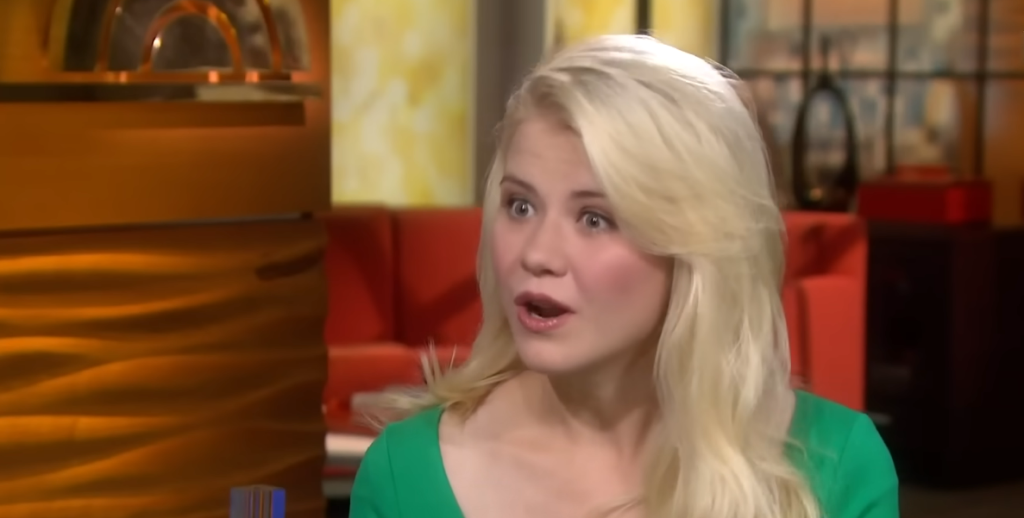
Lois participated in efforts for child safety and co-founded the Elizabeth Smart Foundation in the early 2000s. In interviews with networks such as CNN and ABC, she spoke purposefully, advocated ethically, and made sure her daughter’s recovery wasn’t reduced to a soundbite for the media.
Eventually, she settled on stillness.
Seated on a ratty couch in a college apartment, I recall watching one of those early interviews and being impressed by her poise. Lois leaned forward as a mother holding fast to her child’s dignity, not as a performance, even as reporters swarmed around the most upsetting aspects.
It was a persistent image.
Lois has stayed out of the spotlight ever since, and I think that the way quiet is viewed now is noticeably better. Viewers are starting to realize that not every story needs to be repeated from every perspective, especially when it involves severe emotional injuries. Some people use silence as self-defense rather than avoidance.
The fact that Lois declined to appear in the 2022 documentary series I Am Elizabeth Smart served to further emphasize that argument. Instead of being resentful, it might have been an acknowledgment that her chapter was over and that her daughter’s voice was more than sufficient.
In response to inquiries concerning her mother, Elizabeth has been exceptionally kind. With great affection, she talks about Lois, stressing her part in the healing process and how she was always there, even when it wasn’t said.
This kind of emotional labor, which is frequently unseen by the general public, merits acknowledgment. The basis of every captivating survival story is held in place by a silent architect. Architect Lois Smart was and still is.
Fortunately, there has been a change in the public discourse regarding trauma sufferers in recent years. Particularly for those who used to face the intolerable burden of national attention, there is now greater space for nuance, personal boundaries, and voices who want to remain silent. Lois’s absence has subtly but clearly influenced that change.
It’s crucial to keep in mind that, in a time where content creation is aggressive, choosing privacy is not just a passive action. It’s an incredibly useful tool for defining boundaries. Few people are able to maintain the agency that Lois did by refusing interviews, staying away from memoirs, and opposing commercialization.
This decision has been especially helpful for families dealing with collective trauma. It has demonstrated self-control, honesty, and the courage to allow others to express their suffering in a different way. By doing this, she gave her daughter the freedom to reinvent herself without having the storyline tainted by maternal remarks.
While Ed Smart continued to be in the public eye on occasion, giving speeches at news conferences and participating in policy debates, Lois completely changed her emphasis. In 2019, the couple finally got divorced, a fact that rarely attracts much attention but subtly illustrates the long-term impact that such occurrences can have on family structures.
Even if Lois doesn’t appear in the media, she is still mentioned in conversations on victim advocacy. Her earlier work established a basis on which Elizabeth and others have since built. Even while that lasting impact isn’t as obvious, it’s incredibly resilient.
Instead of being about absence, Lois Smart’s story is about recalibration. of retreating when emotional capability was overtaken by public expectations. of giving room for her daughter’s adulthood to develop without a public reminder of her inherited anguish on every picture.
Thus, Lois creates a presence while she is away.
One characterized by choices that altered what dignity can look like after a calamity, rather than by screens or soundbites. For anything to have meaning, it doesn’t have to be told. Off-camera, off-script, and out of the spotlight, often the most empathetic parenting occurs long after the rescue.

