
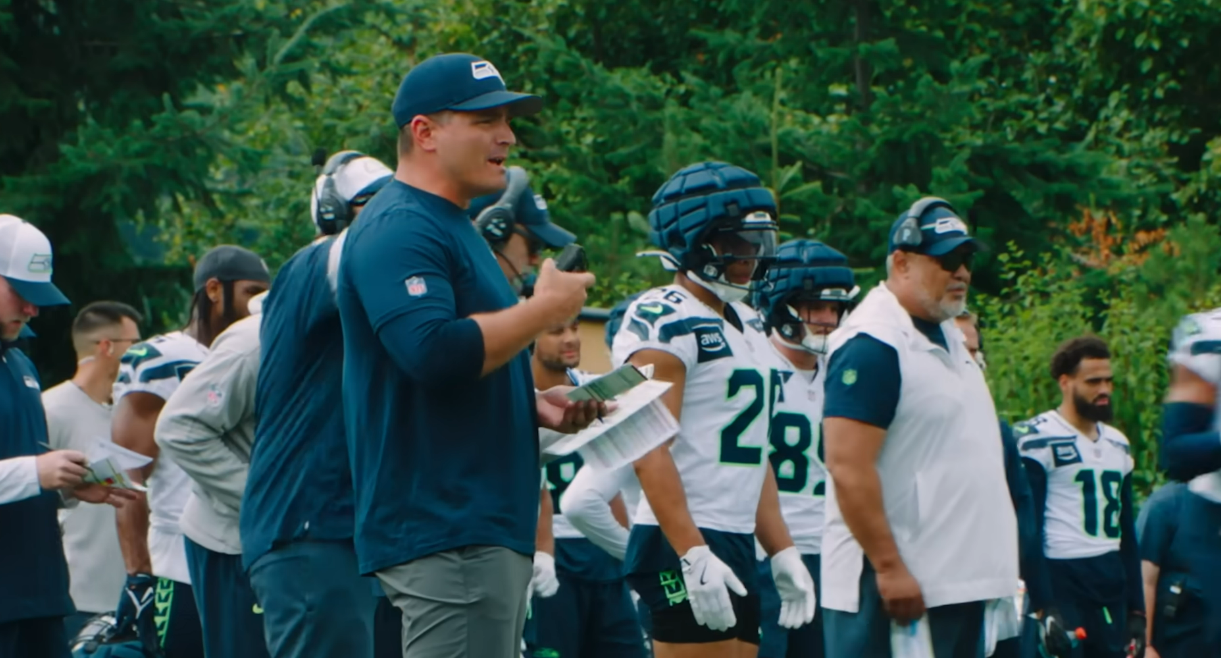

The questions started as soon as the confetti had landed in Seattle. As the Seattle Seahawks, who had just won Super Bowl LX, continued to travel through downtown on open-top buses, players waving to fans dressed in neon green and navy, another type of rumor began to circulate. Contracts are not the issue. Not with regard to the upcoming season. Concerning Washington.
Whether they would travel to the White House for the traditional championship trip, in particular.
It’s possible that no one would have inquired ten years ago. It used to seem like a routine visit, a part of the ritualistic apparatus of American sports. However, as I stood along the parade route close to Pike Place Market, I could hear hesitancy in the voices of fans chatting while holding championship flags and coffee cups. Certainly pride. But curiosity, too. And perhaps some fear.
Currently, the situation is still unclear. The White House has not confirmed an official invitation, and the team has not made a public announcement. Because of this lack of clarity, there is a void that quickly fills with political projections, rumors, and presumptions in today’s sports culture.
| Category | Details |
|---|---|
| Team | Seattle Seahawks |
| Achievement | Super Bowl LX Champions |
| Event | Traditional White House Championship Visit |
| Current Status | No official invitation confirmed as of Feb. 2026 |
| Location | White House, Washington, D.C. |
| Previous Visit | 2014 visit after Super Bowl XLVIII win |
| President | Donald Trump (current administration) |
| Tradition | Longstanding ceremonial meeting with U.S. President |
| Official Team Website | https://www.seahawks.com |

Although there isn’t any proof, some fans already think the decision has been made. Millions of people have viewed social media posts that claim the team declined. Seeing those rumors develop is like watching a story being written before its conclusion.
In fact, the custom dates back many years. Winning teams, still elated, come to the president to shake hands, take pictures, and give symbolic gifts. The last time the Seahawks did it was in 2014, following a victory over the Denver Broncos, and it seemed simple. While the players laughed behind him, President Barack Obama held up the team’s iconic “12th Man” flag with a big smile. The pictures showed a straightforward ceremony—the victory meeting.
The emotional tone feels weaker this time.
Time may play a role. The Seahawks’ Super Bowl victory came amid a sharply divided political landscape, which frequently draws athletes into discussions they had no intention of participating in. Social issues have been openly discussed by some players in recent years. Some have completely shunned politics. It’s still unclear if the locker room as a whole agrees on what the White House visit means.
Football, not ceremony, is said to be the main focus of the atmosphere inside team facilities in Renton, Washington. Film is reviewed by coaches. Players start to recover during the offseason. The question, however, persists, silently waiting.
The invitation itself seems to have taken on a more symbolic meaning than the actual visit. Acceptance or rejection now has cultural connotations that go beyond athletics. That change took time to occur. Past scandals, postponed trips, and athletes’ sometimes grudging decisions that attendance itself might be seen as a statement all contributed to its slow development.
Even the White House seems wary.
The political ramifications of sending out an invitation that might be turned down could be a consideration for officials. When Americans were temporarily brought together across divides by sporting triumphs decades ago, that type of calculation would have been unimaginable. Those divisions seem more apparent today.
The banners for the championship sway a little in the winter wind outside Lumen Field, the home stadium of the Seahawks. Sometimes, fans pause to take pictures of them, standing for a brief moment in silence before continuing. For many, the true prize is still the championship itself. The question about the White House seems unimportant. However, it is not unrelated.
The majority of the players have been silent.
Quarterbacks, defensive standouts, and coaching staff have subtly sidestepped questions with cryptic statements. “We shall see.” “That isn’t my decision.” “We’ll get past that obstacle.” Those responses imply hesitancy, or maybe caution.
This feels so different from previous championship seasons that it’s difficult to ignore. After months of self-discipline, the team’s victory on the field was decisive and confident. Off the field, it feels much harder to predict what will happen next.
As this plays out, it seems like the Seahawks are handling something more significant than a formal invitation. They’re negotiating expectations.
History must be taken into account as well. Invitations were turned down by a few championship teams in recent years. Others went, but they were criticized regardless of their choice. At this point, either option seems to invite a response.
The White House visit may hold great personal significance for the players, many of whom grew up hoping to win the Super Bowl. An emblem of childhood. A flash of insight. Or perhaps something else to do in a busy year.

