
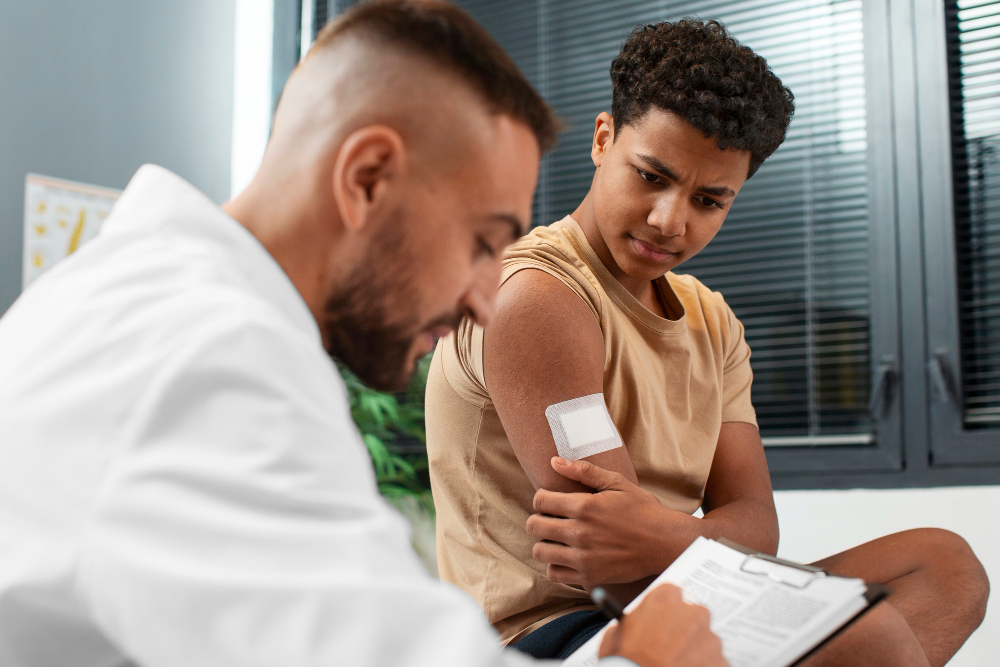

The email came without fanfare—no dramatic subject line, no blaring red warning—just a basic statement from University Health Services. But underneath the calm tone was something that made me pause: a verified case of measles had reached UW–Madison.
Measles is one of those diseases many thought eradicated decades ago, yet here it was, making its presence known through a single student. After returning from a trip abroad, the student was apparently vaccinated and is well. Campus health experts and county authorities then conducted a painstaking tracing operation, piecing together every location the student had visited while contagious.
| Category | Details |
|---|---|
| University | University of Wisconsin–Madison |
| Confirmed Case | Measles, in a student recently returned from international travel |
| Exposure Sites | Qdoba, Union South, Brogden Psychology, Waisman Center, Genetics Bldg |
| Exposure Dates | January 27–29, 2026 (multiple time windows) |
| Vaccine Protection | MMR vaccine ~97% effective (two doses) |
| Campus Vaccination Rate | Estimated 95% vaccinated according to UW–Madison |
| Action Taken | Contacted ~4,000 potentially exposed individuals |
| Public Health Partners | Public Health Madison & Dane County, Wisconsin DHS |
| Reference | UHS Wisconsin |
From the Union to the Waisman Center, from Brogden Hall to Qdoba, the path of exposure traversed food counters and academic hallways with unnerving ease. Those locations—routinely visited by thousands—briefly became data points in a bigger confinement campaign.
By cooperating with local and state public health organizations, the university started a proactive communication program. Nearly 4,000 people were notified of possible exposure. For most, it meant little more than monitoring for symptoms. However, the consequences—a 21-day ban from campus—were especially uncomfortable for those who were not vaccinated.
That momentary seclusion underlines the extraordinary efficacy of immunizations. Two doses of the MMR vaccine are practically failsafe, delivering protection that is both highly efficient and exceptionally enduring. And UW–Madison’s campus, with around 95 percent immunization coverage, benefits from a network effect where risk is greatly decreased by collective protection.
Still, measles is unrelenting. It clings in the air, lingers on surfaces, and waits for its next host with silent precision. An infected individual can leave a room, and the virus may remain suspended for up to two hours. That fact alone provides public health professionals every reason to act quickly—and they did.
What struck me most wasn’t just the thoroughness of the response, but the tone of reassurance that guided it. Public Health Madison & Dane County didn’t magnify panic; they clarified facts. They identified buildings and hours with great clarity, assuming that students, professors, and families could digest this information and act accordingly.
During the pandemic, I observed how rapidly misinformation could unravel confidence. So when this message arrived, I expected a flood of internet skepticism. Instead, what emerged—remarkably—was teamwork. Many pupils checked their records. Parents called clinics. Some even booked MMR boosts, even though they were technically up to date.
That communal response, fuelled by belief in science, was particularly uplifting.
In the setting of college life, where students often share places, meals, and routines, measles presents a striking reminder of how quickly a single point of contact can propagate outward. Yet it also highlights how a well-informed community, equipped with the instruments of prevention, may contain a threat before it grows.
Interestingly, UW–Madison does not require confirmation of immunization for enrollment, a requirement it has considered in years past but never enforced. It’s a divide that silently exists in many organizations nationwide, one that now feels worth examining. The distinction between exposure and epidemic can be surprisingly hazy when it comes to measles.
The student involved was immunized, which likely helped lessen severity and recovery time. Additionally, their prompt medical attention helped stop the spread of the illness. By diagnosing symptoms early and following isolation standards, they allowed public health professionals to act rapidly and narrow the risk window.
For me, the true story here isn’t about alarm—it’s about awareness. A college was reminded of its interconnectedness by measles—not out of fear but out of accountability. It highlighted how immunity is more than a shot in the arm; it’s a commitment to the people around you.
Since the incident, public health officials have recommended people to examine their vaccination records. The messaging has been exceedingly clear: two documented dosages equal protection. If you’re unsure, get checked. Get a booster if you need one. And if you develop symptoms—fever, rash, cough—stay home and call first.
The university used that message to transform a possible disaster into a public health coordination case study.
In recent days, I’ve observed conversations transition from worry to resolution. Friends chatted about childhood vaccines. Health warnings have been introduced by professors to their curricula. Even students who rarely engage in campus problems began to inquire ways to make immunization information more available.
That has a very grounding quality. A virus as old as measles provided an oddly enlightening moment in a digital age full of divisiveness and distractions: trust science, act quickly, and protect one another.
And probably most critically, be informed—not just when the email arrives, but well before it’s needed.

