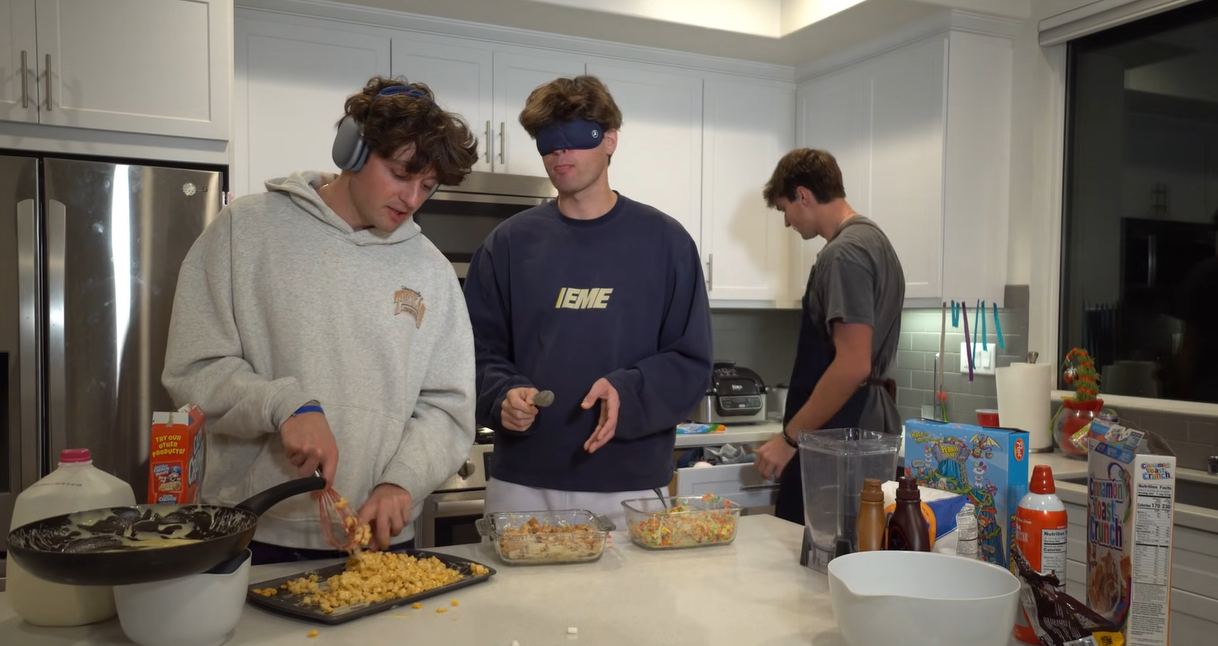

Being the public face of grief was never something Carson Genal requested. However, when Carson learned that his older brother, Tucker, had died at the age of 31, he was forced to speak the most difficult words aloud—online, uncensored, and unbelievably human.
His homage didn’t sound like it was written with sympathy in mind. It read as if it had been written in the silence between sobs. A message designed for closure rather than clicks. Quite miraculously, it was warm and heavy. He referred to Tucker as his hero in one particularly noteworthy line. The internet paused to pay attention.
There wasn’t a ton of content that came next. Carson did not use loss as leverage. He did not reinterpret the event in terms of change or branding. Rather, he halted, which is a rather uncommon action. A quiet that was entirely at variance with algorithmic demand, yet startlingly reminiscent of sadness.
Prior to all of this, Carson’s material had a rhythm, complete with sibling riffs, fast cuts, and gym humor that never bordered on conceit. Like a living room act, the Hustle House trio went on to become well-known. Millions of people found solace in the beat of repetition.
Tucker’s passing altered the melody as a whole, not just the rhythm.
Although Carson’s message on his brother’s passing wasn’t meant to go viral, it was sincere out of need. Grief has a particularly compelling quality that doesn’t require validation. His request for privacy was blatantly obvious and not disguised by a calculated tactic.
They respected that clarity. The followers withdrew. The tone of the comments changed. Rather than engagement bait, there were recollections, condolences, and a shared realization that perhaps stillness was sufficient this time.
| Name | Carson Genal |
|---|---|
| Age | 26 |
| Profession | Social media creator, former college football player |
| Known For | Comedy and lifestyle content; Hustle House collective |
| Education | Florida International University |
| Athletic Background | FIU Panthers football (tight end) |
| Siblings | Tucker Genal, Connor Genal |
| Social Reach | Millions across TikTok, Instagram, Facebook |
| Reference | people.com |
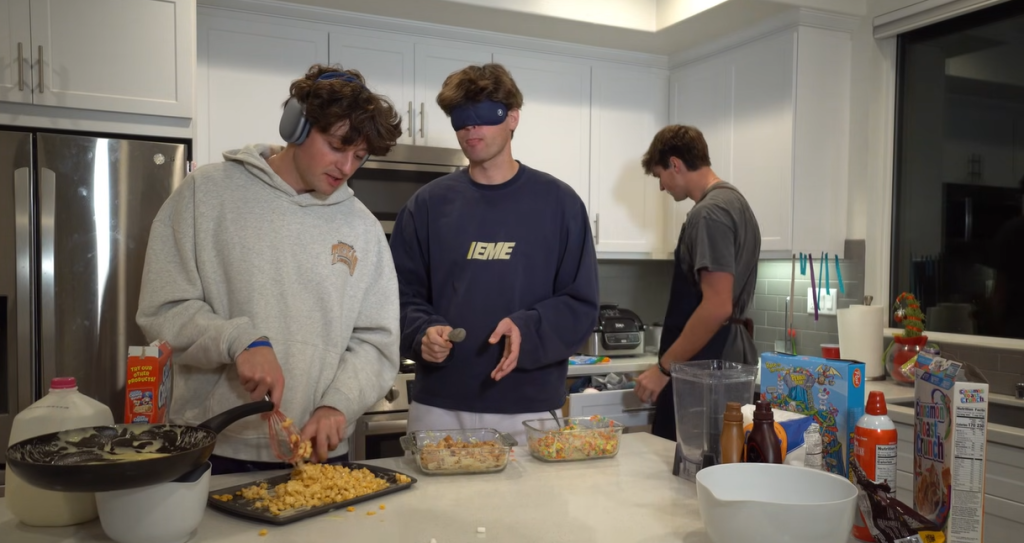
By taking a step back, Carson exposed something that the platform frequently conceals: resilience doesn’t have to be showy. There is no need for a highlight reel when grieving. His self-control turned into a subdued protest against a society that demands artists to turn every feeling into money.
Carson probably knew how to strike a balance between presence and preservation since he grew up in football systems where toughness is determined by quiet endurance. Despite your inner need to sit down, you learn to show up on the field. That ability becomes painfully helpful off the field when life completely reorganizes your emotional structure.
Content producers are under implicit pressure to continue the show. Carson took the opposite action. He let the atmosphere to settle. His strategy, which was remarkably successful in its simplicity, showed that not everything had to be packaged, explained, or made profitable.
The tone was consistent even in the few subsequent posts: measured, genuine, and never overstated. The audience was able to adapt as well because of the consistency, which was noticeably better than what we typically see. It wasn’t a concerning absence. It seemed well-earned.
During this period, his bond with his other brother, Connor, gradually came into focus. Their exchanges turned into anchoring moments. Just human, not content-driven. Mutual resilience emerged, one that aimed to endure rather than amuse.
Grief can destroy more than routine for creative whose identity was based on unity. It has the potential to shatter the brand’s foundation. Carson didn’t change its name. He just accepted the loss and went on, slowly and deliberately. It was a very uncommon gesture of emotional transparency on internet networks.
He didn’t intend to inspire, which is what makes his handling of this situation so profoundly poignant. He wasn’t a teacher. He did not provide any philosophical insights. Just being there. Just evidence that you don’t need to transform what breaks you into content in order to survive it.
I recall seeing remarks from total strangers under his article, such as “Take your time” or “We’re still here when you’re ready.” It is uncommon for audiences to be that patient. It was merited.
Silence is not preferred by the algorithms. They penalize it. However, Carson was able to withstand those unseen forces because of the trust he had already established. It was a remarkably human reaction in an environment where robotic consistency is becoming more and more prevalent.
Carson changed the definition of being publicly vulnerable by deciding to speak only when absolutely required. His words weren’t penned for the masses, his sorrow wasn’t edited, and his anguish wasn’t packaged. Their purpose was to provide relief.
His name has been subtly spoken for the past month—not because he made a comeback, but rather because of the dignity with which he left. Additionally, that is frequently disregarded when discussing what makes a creator noteworthy. However, it’s possibly the most lasting legacy one can leave behind.
Carson may make a comedic comeback in the upcoming months. or health. Or something completely different. However, whatever follows will be influenced by the silence he gave himself—and the deference others showed to it.