
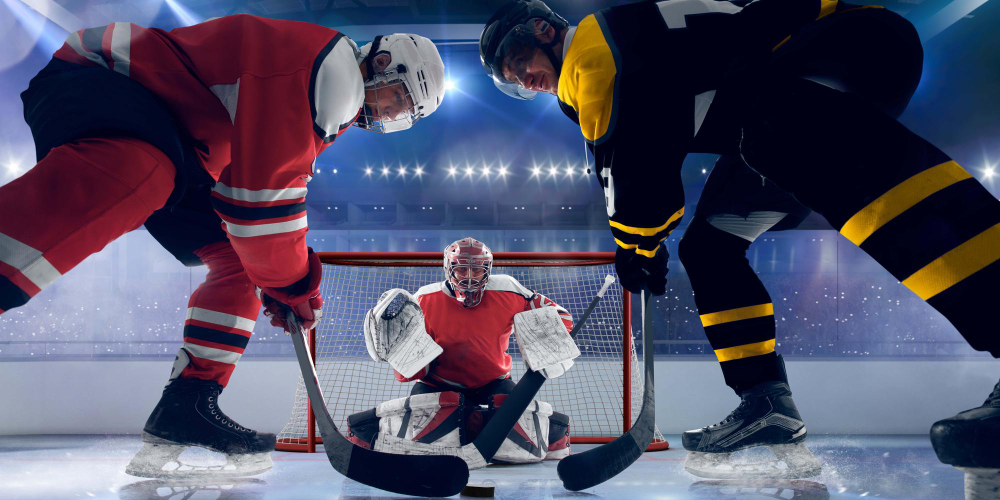

The ice appeared nearly immaculate. Arena workers moved silently across the Milano Santagiulia arena’s surface hours before puck drop, dragging hoses and smoothing out flaws that the majority of spectators would never notice. Rows of vacant seats curved upward into shadow above them, waiting for a tension that only materializes when everything is at stake.
There has always been a certain weight to the men’s hockey gold medal game. However, there’s a feeling that this one might stick in people’s memories longer than most here in Milan.
| Category | Details |
|---|---|
| Event | Men’s Ice Hockey Gold Medal Game |
| Tournament | Milano Cortina 2026 Winter Olympics |
| Venue | Milano Santagiulia Ice Hockey Arena |
| Location | Milan, Italy |
| Date | February 22, 2026 |
| Teams | TBD (Likely contenders include USA, Canada, Finland, Slovakia) |
| Historical Context | USA last won gold in 1980; Canada last won in 2014 |
| Official Reference | https://www.olympics.com |
Perhaps the timing contributes to the sensation.
This marks the last punctuation mark before the closing ceremony dims the lights at the Olympics’ final major event. Players know what that means. In Olympic hockey, tomorrow is not possible. No Game 7 the following week. No second chances next season.
Earlier this week, supporters in loose groups outside the arena, sipping coffee in the chilly morning air, were dressed in USA and Canadian jerseys. A few already appeared anxious. Others made an effort to appear inconspicuous by scrolling through their phones as though this were just another game.
However, no one actually thinks that. For the US, just getting to this point is emotionally significant. Since the renowned 1980 squad stunned the world by defeating the Soviet Union in what still seems like a sports miracle in Lake Placid, the nation has not won an Olympic gold medal. Because of how frequently it has been told, that story runs the risk of becoming myth rather than history.
This younger, quicker team is pursuing a goal more complex than nostalgia. It seems like players today aren’t attempting to reenact that particular moment. They are attempting to swap it out.
In contrast, Canada takes a different tack when it comes to gold medal games. Winning is nothing new. The body language of the Canadian players during the tournament’s warm-ups appeared almost normal, as if they were men showing up for work rather than making history.
Players like Connor McDavid accelerate in ways that cause defenders to pause as they move across the ice with unnerving ease. Even the most formidable defensive units may not be able to completely contain him when the stakes are at their highest.
Olympic finals are not always dominated by outstanding athletes. However, they frequently leave fingerprints behind.
The Americans respond in a different way. Their elegance isn’t their strength. It’s opposition.
Their defense twisted but did not shatter when I watched them play Sweden earlier in the tournament; they collapsed around their goalie, blocked shots, and forced opponents into awkward positions. They prevailed in overtime, the type of conclusion that leaves players feeling both worn out and oddly composed.
Confidence can be developed more quickly by survival than by dominance.
Following Slovakia’s surprising run deep into the tournament, a group of Slovakian supporters waved flags somewhere in the stands. They seemed a little incredulous in their excitement, as though they had no idea how long the moment would last.
Expectations can be complicated by underdog stories.
And Finland, which is quiet and accurate, is still unpredictable. When all goes according to plan, their technical skill can destroy more formidable teams. However, this hasn’t always been the case.
Olympic competitions condense feelings into impractical timeframes.
It’s difficult to ignore how different this feels from playing hockey professionally. Players in the NHL go back to their teams, their daily schedules, and their pay. They go back to something less concrete here. national character. Dreams of childhood. pressure that is not statistically measurable.
Gold medals alter the perception of athletes.
Equipment is arranged in tidy rows inside the locker rooms, gloves are slowly drying, and jerseys are ready to absorb perspiration and history. Before games, some players sit quietly and gaze at the ground. Others hide their nervousness behind loud laughter.
Everybody experiences it in a unique way.
There is a fleeting, nearly imperceptible moment when athletes gaze up into the crowd as they enter the Olympic rink. Not specifically at anyone. Only up.
As though attempting to take in the enormity of it all.
The actual game will be over soon. It always does. The first few minutes are cautious. faster in the middle period. The last few minutes were intolerable.
Then it was abruptly over. Everything can be decided by a single goal.
Which nation will be at center ice when the final horn sounds is still up in the air. Olympic hockey predictions seem flimsy. Favorites don’t win. Heroes are made from unknown players. Careers change course in a matter of seconds.
The gold medal game is unique in part because of this uncertainty. It exists beyond what is typically expected.
The moment will seem both sudden and inevitable when the victorious team finally assembles around its goalie, gloves up, faces worn out and incredulous. The cameras will flash. There will be flags flying. There will be an anthem.
Additionally, a player will discover that their life has changed. The ice will stay behind, scarred by skates and struggle.

