
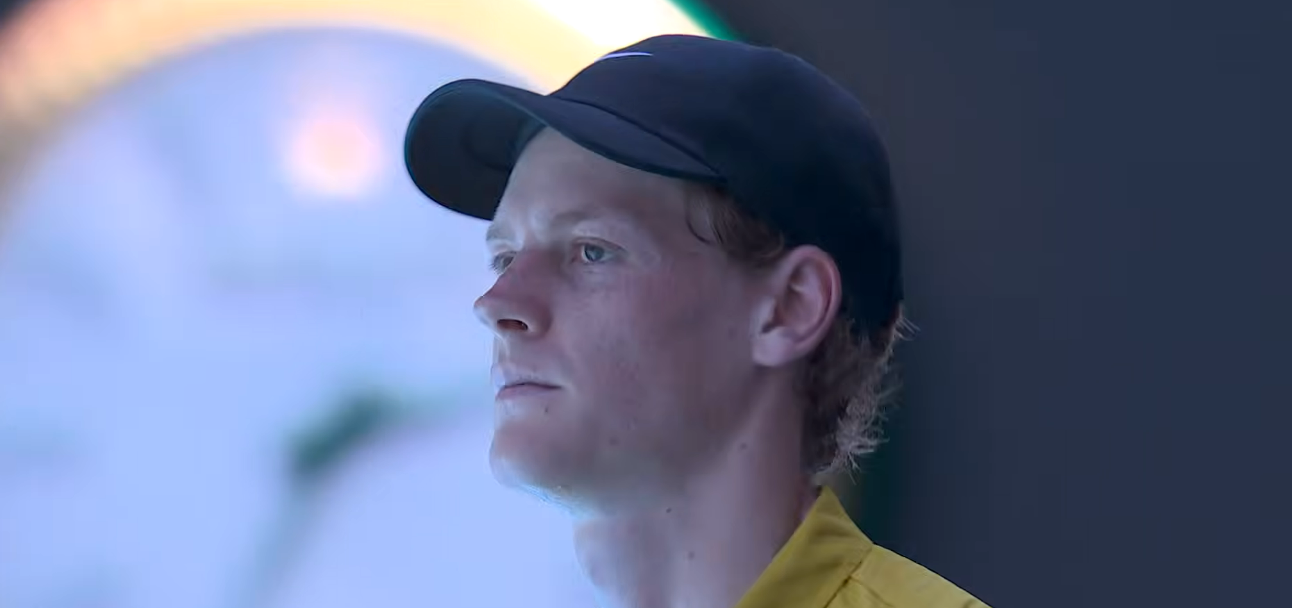

In theory, it should have been a straightforward, clinical victory. The second-seeded Jannik Sinner came into the third round focused, motivated, and with a distinct advantage. However, Eliot Spizzirri, a wildcard ticket holder and former college champion, entered Rod Laver Arena with something far more disruptive: faith.
Right from the start, Spizzirri’s play felt well-balanced. Especially from the baseline, his combination of aggression and skill was incredibly successful. Early on, he pressed Sinner with his aggressively angled, stinging forehand, eliciting awkward reactions. The audience leaned forward with increasing interest as the Italian tried for a time to find his rhythm.
In Melbourne’s arid heat, Spizzirri appeared to be a man with nothing to defend and everything to prove. His drop shots fell with almost perfect weight, his serving game significantly improved from earlier games, and his footwork remained incredibly clear. By the middle of the second set, even the most seasoned fans started to wonder: was an upset quietly taking place?
Then the conditions shifted as the tempo reached its apex. The Australian Open’s stringent heat rule was triggered by the rising temperatures outside. It took only a few minutes to close the retractable roof. The result was a full atmospheric recalibration, not merely a change in shade.
| Detail | Information |
|---|---|
| Event | 2026 Australian Open – Round 3 |
| Match | Eliot Spizzirri vs. Jannik Sinner |
| Result | Jannik Sinner defeated Eliot Spizzirri in 4 sets |
| Key Turning Point | Heat rule triggered mid-match, closing roof and altering conditions |
| Notable Incident | Spizzirri suffered visible cramps, momentum shifted post-interruption |
| Sinner’s ATP Rank | No. 2 |
| Spizzirri’s Status | Wildcard entrant, former NCAA champion from Texas |
| External Reference | Australian Open Official Site |
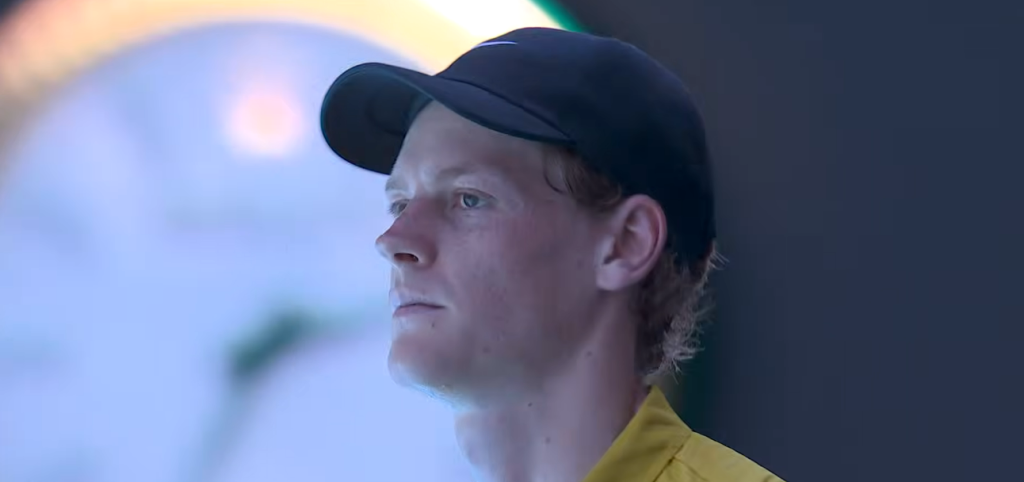
Spizzirri was now playing beneath a ceiling that seemed to compress time and tempo, whereas he had flourished in the slower, heavier settings. His movements became more precise. His results became flattened. And the physical strain gradually became apparent. With every change, he looked more and more exhausted—battling through cramps with a tenacity that was both admirable and agonizing to observe.
His box’s quiet, I recall, spoke louder than any fist pump ever could.
Sinner, on the other hand, came out of the pause practically brand-new. His shots became much faster and bounced lower on the slippery surface. He refined his angles, changed his position, and started dictating points. Even though it was still up for debate, the third set clearly went his way. Dressed in formality, the fourth seemed inevitable.
But what remained was not Sinner’s victory. The reason was Spizzirri.
He didn’t lose it. He didn’t go into retirement. He continued to move, albeit rigidly, and continued to swing deliberately. Every point turned into its own story, characterized by rejection rather than outcome. Although the uphill battle was revealed by the scoreboard, the atmosphere in the stadium conveyed something far more intangible: respect.
The name Spizzirri is unfamiliar to many tennis fans. However, his accomplishments have been extremely impressive in recent months, especially since he left NCAA tennis. Although his game lacks some refinement, it is driven by a rawness that frequently surprises opponents with higher rankings. Sinner was the perfect example of such unpredictable nature—until the roof closed and everything changed.
Discussions of when environment-based regulations should be used were also rekindled by the match. Was the mid-set play pause fair? To prevent interfering with rhythm and momentum, should these interventions be restricted to the intervals between sets? When these issues lead to such obvious changes in the competitive flow, they are not only theoretical worries.
Rules are in place for safety, though. Furthermore, Spizzirri maintained his coolness despite the fact that his momentum was disrupted. It is very admirable only for that.
A four-set defeat rarely enhances a player’s reputation. In this instance, however, the match was a highlight rather than a roadblock. Spizzirri is more than just a wildcard tale, as seen by his capacity to adjust under duress, persevere through suffering, and relentlessly challenge one of the best.
His post-game remarks were similarly composed, calculated, and optimistic. He minimized the unpleasant, emphasized the good, and accepted the change in circumstances. It’s the kind of mindset that frequently precedes innovations. And this mentality will probably help him advance further in subsequent draws more than his stats.
Sinner saw the match as a warning masquerading as advancement. Yes, he did advance. But even as the physical toll became evident, he had to contend with an opponent who didn’t back down. It can be surprisingly helpful to have that kind of experience before a Slam.
These kinds of matches are frequently overshadowed by highlight reels of center-court upsets or five-set marathons. However, for those who paid careful attention, this one provided something unique—something incredibly resilient. It served as a reminder that there is less of a distinction between emerging and elite. Resilience doesn’t necessarily have to lead to success in order to be beneficial.
The Spizzirri was changed, not simply worn out, as he left that court. And that in and of itself was worth the ticket fee for tennis fans who were paying attention.

